




Tuesday, April 8, 2014


I'm trying out straw bales for the first time. I found this article helpful. He gives instructions on prepping the bales.
http://modernfarmer.com/2013/07/straw-bale-gardening/
http://modernfarmer.com/2013/07/straw-bale-gardening/
Gardening with Straw Bales
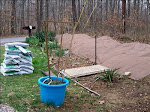
Two weeks of conditioning and I'll be ready to plant in these bales. The tree limbs are from my stash and we wove them together. I packed clay soil around the bases of the poles. Next I'll wrap the whole thing in plastic to speed up the bale's breakdown. I use urine to break mine down.

Two weeks of conditioning and I'll be ready to plant in these bales. The tree limbs are from my stash and we wove them together. I packed clay soil around the bases of the poles. Next I'll wrap the whole thing in plastic to speed up the bale's breakdown. I use urine to break mine down.
Wednesday, February 26, 2014
Zone 7
With lower elevations and longer days, a variety of vegetables will thrive in a Zone 7 garden. Lettuce, cabbage, broccoli and Brussels sprouts can be planted before the last frost. Carrots, beets, radishes, and parsnips will also do well. Onions, potatoes, peas, radishes, salad greens, and a variety of herbs can also be planted during this time frame. Most areas in zone 7 get moderate to high rainfall and many areas have little snowcover in winter. This makes zone 7 gardening an ideal gardening environment. Fall-grown vegetables, in particular, are usually of very high quality.
Monday, February 24, 2014
Who's
planting veggies in their flower beds this year? Did you know Rainbow
Swiss Chard is gorgeous even if you don't eat it? Strawberries make
great ground cover in blank areas. Green sweet peas have pretty flowers
and you can grow them on your fence or a trellis. You don't have to go
all-out. Start small, and if you're a landscape gardener, think of
adding pretty veggies to your yard. Even if you
live in an apartment you can grow veggies on your deck. In giant pots,
plant tall full-sun vegetable so you can grow more shade-requiring
veggies beneath. I'm all about the food garden this year. One last
thing: PLEASE, if you buy seeds, buy organic. GMO (genetically modified
seeds) are pernicious evil things that pollute not only your garden, but
your neighbor's. If you plant your GMO near my Heirloom Organic
veggies, I'ma be mad.
I keep posting about starting small growing areas anywhere you can. Even large pots work in a sunny location. This UN Report says small-scale organic farming is the way to feed the world. This year I plan to over grow so I can donate to the soup kitchen here in town. I urge you to grow something --- anything edible. Do it this year. Save the world.
http://overgrowthesystem.com/un-report-says-small-scale-organic-farming-only-way-to-feed-the-world/
*I'm making new beds in the back for flowers, like zinnias, to grow. That way bees will flock to my garden. I'm using the lasagna method, which is excellent. I first learned of it from Peter Fossel. I believe he still works the Hermitage...? Anyway, other than straw bales, the lasagne method is the easiest way to start a new bed.
I keep posting about starting small growing areas anywhere you can. Even large pots work in a sunny location. This UN Report says small-scale organic farming is the way to feed the world. This year I plan to over grow so I can donate to the soup kitchen here in town. I urge you to grow something --- anything edible. Do it this year. Save the world.
http://overgrowthesystem.com/un-report-says-small-scale-organic-farming-only-way-to-feed-the-world/
*I'm making new beds in the back for flowers, like zinnias, to grow. That way bees will flock to my garden. I'm using the lasagna method, which is excellent. I first learned of it from Peter Fossel. I believe he still works the Hermitage...? Anyway, other than straw bales, the lasagne method is the easiest way to start a new bed.
*Using
hula hoops to grow plants. I'll cut them and bury the ends, then attach
small fence mesh to cover them. This is how I'll grow my tomatoes this
year. I want them up and off the ground. And this year I'm collecting
yogurt cups, etc., to create cutworm guards.
*If
you use a cold frame to extend your growing season, line the inside with
plastic milk jugs filled with water. The water be warmed by the sun,
and will help reduce temperature swings inside the cold frame. The
result: a lower chance of frost damage at night and overheating during
the day.
*Dog food as fertilizer boost? Need to build a cuke trellis?
Check it out here: http://www.johnaburks.com/?p=799
*More trellis ideas
Wednesday, June 27, 2012
Learned: About apple trees. I
found some great websites that explained that self pollinators don’t need
another tree, but they’ll produce much better if you plant another tree of a
different varietal. A University of
Illinois study shows that “apple’s soluble fiber strengthens immune systems and
reduces obesity-related illnesses”… so maybe I’ll shoot for an apple a day for
each of us! I requested a book about growing apples from our local small
library.
Sewed: Ordered a quilt kit to sew for my new grandbaby.
I also learned I can’t preserve foods on my glass-top stove because the
glass isn’t built for the high heat involved. Hoping I can use the camp stove.
Planted: Discovered Sprout Robot at http://sproutrobot.com/
. You enter your zip code and it tells you what to plant right now. So I have
several things I’m ready to plant/replant, including all-season lettuce, and autumn
sunflowers.
And speaking of sprouts…we make our own, and just recently got 5-part
sprouting seeds. We’re pretty psyched, as we eat sprouts every day. I still make mine in a mason jar with a
sprouting lid. They stay crispy and crunchy.
Harvested: chives and mint, green tomatoes, blackberries, carrots, amethyst
radishes, onions, lettuce.
Preserved: Started 14-day sweet pickles with pickling cukes from
Farmer’s Mkt. I’m using an old glass
pickle jar to make them then I’ll put them in pint jars to finish.
Recycled, reused, repurposed: My mother gave me an old washstand, old
being good, that she kept in the garage. I put it in our hallway and use it to
store my canners and canning supplies.
On my list:
Plant another apple tree
Treat grape tomatoes with
calcium and magnesium for soil deficiency
Take apple leaf to nursery
Weed tomato bed
Plant more tomatoes in weeded space
Plant lima beans and bell peppers
Buy yogurt starter
Build support for blackberries
Buy a second garden hose
Until next week, onward hoes!
Saturday, June 23, 2012
Back to Life
I'm going back to a format we used to use in an online group I belong to. The group recently revived and I'm inspired to create goals for myself and keep a record of what I do. After four surgeries in 12 months, I am moving slower than usual, but getting all the help I need from my husband.
Researched: How to use my
pressure cooker. I’ve had it for three years and haven’t used it yet.
How to plant blackberries and build a proper trellis for them. When to prune lilacs. I have a “secret garden”
of ornamentals and herbs that is privacy fenced. Lilacs grow there. We also
grow a lot of fennel, roses, Greek oregano, rosemary, sunflowers, and other
herbs. It’s where we sit in the evenings.
Harvested: Beets (we use the greens for salads), carrots, romaine,
mesclun, strawberries. One more harvest then I’m letting the rest of the
lettuce go to seed. We’ve also harvested some giant green tomatoes to fry. As
always my garden tomatoes have escaped their cages and are running rampant all
over their “boxes.” I’ve not found an effective way yet to support them.
Planted: Dill, cilantro, okra, and two ornamental hot, hot peppers aptly named Explosive Embers and Chilly Chili. I’ll pick and dry them for winter’s cooking.
Food storage: Our backyard blackberries are ripening; what we don’t
eat, we freeze. We also pick berries along a country road nearby and have done
so for six years now. The berries are small and full of flavor. We don’t get a lot out of either venture,
just a small steady stream. This year we plan to expand the blackberry area in
the yard into a BLACKBERRY EMPIRE! Also
checked my jars and lids for annual pickle making with my mom. Bought cukes at
Farmer’s Market this week.
Reused, recycled, repurposed: Worked on stuff for the new composter. It’s huge. I have some compost maker I plan to use. I added some shredded newspaper and dried grass cuttings. It’s located in direct sun so I have to wet the compost down good. My plan is to plant some butterfly bushes around it to shield it from sunlight.


Our kitty enjoying one of the garden benches. Enormous blackberries! And one of our little French intensive garden beds.
Watch for updates! I'll be sharing our method of tranplanting blackberry bushes, keeping the birds out of the strawberries and defeating the dreaded hornworms.
Caroline
Saturday, April 16, 2011
More Scrapbooking
Thanks for all the compliments on my scrapbook project. As promised, here are a few more pages to look at. Feel free to copy any layouts or use any ideas you get from my pages.

 Alan's graduation from Fordham, complete with original tassle.
  Tribute page to my mother.


Thanks again for the compliments.
Thursday, March 31, 2011
Monday, March 28, 2011
Scrapbooking
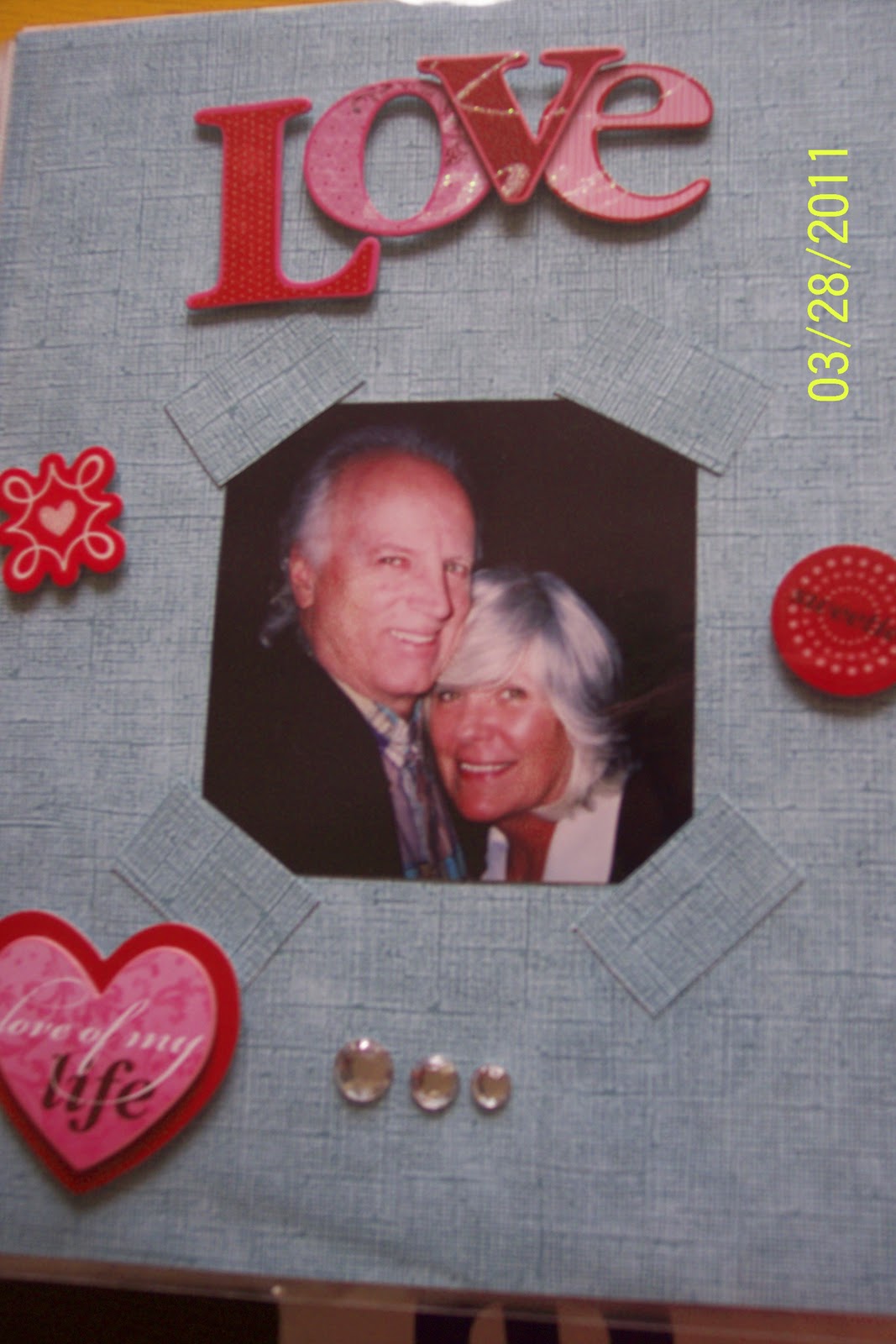
Scrapbooking is all the rage, and the elements are cute, so I thought I'd give it a try. First I used an old copy of Farewell to Arms and did some creative things to the pages. Then I went on to trying my hand at traditional scrapping. It's relaxing and keeps my mind occupied in a zen-like way. Below are some of my beginner's pictures. Many still require missing elements.



For more information there are plenty of sites about scrapping, complete with free ideas. To get started, read more about this cute hobby at http://scrapbooking.about.com/.


For more information there are plenty of sites about scrapping, complete with free ideas. To get started, read more about this cute hobby at http://scrapbooking.about.com/.
Thursday, March 3, 2011
Make Your Own Granola
With food prices increasing every day, it makes sense to cut corners whenever possible. One way to reduce costs is to make your own granola. You can eat it alone with milk or hot water, on top of other cereals, mixed into yogurt. When you make you own, you are able to control what kind of additives and ingredients go into your food.
Ingredients:
Oatmeal
1 c. Honey
2 TBLS. Margarine
Fruits
2 cups Flax seed
1 cup nuts
2 cups sunflower seed


Add nuts and flax seed...then fill bowl with oats. Pour the honey mixture over the ingredients and gently stir and turn the oat mixture until evenly coated.


Spread the oat mixture evenly in two pans. Bake at 350 degrees for 15 minutes. Let cool slightly.

Add fruits now, when granola is slightly cool. Gently mix together in pans.


When fully cooled, finished product should be sealed in an airtight container.
Thursday, February 24, 2011
Wormy Delight
This is such great info that I lifted it from the Gardens Alive website located at http://www.gardensalive.com/product.asp?pn=8815 to share with you. I can personally attest to the value of adding earthworms to your garden sites. Read on to find out more from Gardens Alive®!
“Encapsulated Earthworm Cocoons from Gardens Alive!® are convenient and easy to add to your garden soil. You plant them in garden soil just as you would plant ordinary seeds. They’re especially useful for people switching from conventional to organic gardening. Better soil quality gives your organic seeds the best start. Each cocoon contains 1-10 eggs, depending on the species, and each egg will produce one earthworm.
Greatest Living Natural Soil Boosters
Gardeners covet earthworms' presence in their plots because:
- their castings boost nitrogen in the soil
- they move deep-soil nutrients closer to plant roots
- their tunnels loosen soil, improving aeration
- their activities help soil particles bond, balancing moisture retention and drainage
Earthworms perform this same magic in compost, speeding the development of nutrient dense, moisture-dispersing humus.”
Monday, September 13, 2010
Shimmering Images of Fall


When I talk about pictures in my mind I am talking, quite specifically, about images that shimmer round the edges…you just lie low and let them develop. Joan Didion
 Rough cut fields spotted with brown hay bales… smooth rounded gourds in gold, orange and green… sharp smell of mown grass… fat yellow garden spiders weaving stories in their webs…brown crunchy leaves underfoot… Farmer’s market bounty: colorful greens, papery onions, gourds and pumpkins…blue cloudless skies…clever scarecrows in straw hats and overalls…a clump of brittle corn stalks…
Fall is my favorite time of year. The skies are gorgeous, gardens putting forth their last glorious efforts, and the sensory sensations of the season are Nature’s last gifts before the onslaught of winter.
Subscribe to:
Posts (Atom)